Monday, 15 July 2019

Virtuous cards and scenters


I began my virtue project in 2007, back then it was part of my WebFlowers project. I started with the seven contrary virtues; Humility, Generosity, Chastity, Temperence, Patience, Kindness, Diligence. These virtues are contrary to the seven deadly sins; Pride, Greed, Lust, Gluttony, Anger, Envy, Sloth. When I started developing ALF Creations @ the Star Heart Cafe I wanted very much to incorporate the virtues into my arts, crafts, and writing.

My virtuous cards include the Star Heart Virtues : Grace, Peace, Love, Hope, Joy and Faith and the manly virtues; Valiant, Loyal and Earnest. The first four virtue haiku cards I created as part of my 'typographical challenge' are Humility, Kindness, Patience and Diligence.

My virtuous scenters include my lavender star hearts and virtuous flowers which are inspired by these words from St Paul.

'Clothe yourselves with compassion, kindness, humility, gentleness and patience. Forgive as the lord forgave you. And over all these virtues put on love.' Colossians 3:12-14


Monday, 8 July 2019

The Six by Six Book Challenge

To help me cope with life better I decided to develop my newly rediscovered joy of fiction reading into a small challenge to read six books in six months. The first six by six book challenge ran from January to June 2019. Here are the reviews of the six books I read.


Kafka on the Shore by Haruki Murakami


This book is mostly about the growing pains of a fifteen year old boy, Kafka Tamura, as he runs away from home, in a vague attempt to grow up and find himself. The book features quite a bit of death, sex and violence, but also a library, poetic visions, music and art, as we follow Kafka's journey towards manhood as well as the poignant journey of a strange old man called Nakata, who can talk to cats and knows a lot of weird stuff, even though he's quite backward and childlike. This is the first fiction book I have read for over a year, it didn't disappoint; it was mostly sheer escapism.


The Guest Cat by Takashi Hiraide

This is a sweet book. You get to know a bit about the Japanese economy and housing crisis of the late 1980s and early 1990s, as well as how a small cat can come to mean so much to an aloof, literary couple. The book was poignant rather than happy, it had a touch of sadness about it, as the march of technology and big business rides roughshod over a dwindling amount of city green spaces. It was also a quick read, it only took a week out of my life.

The Readers of Broken Wheel Recommend by Katarina Bivald


I got on well with this book, which is interesting as the main character is always going on about preferring books to people. The story concerns a young Swedish woman who arrives in an American small town, Broken Wheel, and almost inadvertently opens a book shop. The book features many soothing descriptions of everyday life and many quirky characters. The book has a happy enough ending and I felt it was a very comforting read.

This book will save your life by A.M. Homes


I found this book a little difficult in places, it was a bit fast paced and mad. I think its madness and weirdness were partly to do with its Los Angeles setting. Towards the end of the book I started understanding it more and began to get its message. The protagonist's life starts off clean and orderly and by the end of it it is messy and unpredictable, he is, almost literally, in the middle of an ocean in a rowing boat with no oars, but he also, finally, realises that the meaning of his life lies in being useful to others, not cutting himself off and being totally self-absorbed.


The reader on the 6.27 by Jean-Paul Didierlaurent


This is a sweet, down-to-earth story that concerns a worker in a book pulping factory who falls in love with a lavatory attendant, whose diary he finds on a memory stick left on his commuter train. The story contains many intriguing characters. The hero entertains his fellow commuters by reading pages salvaged from the books he pulps, before reading pages from the lavatory attendant's diary to his rapt audience. His main companions are his goldfish and an ex-factory-worker who lost his legs to the book pulping machine. I found the book to be strangely heart-warming.

A Tale for the Time Being by Ruth Ozeki

This book has been promoted as a mood boosting book, but I think there is a lot in it that is quite sad and disturbing. It concerns a woman in a remote town in Canada who finds the diary of a Japanese girl washed up with the debris of a tsunami. The Japanese girl is living a troubled life in a small flat in Tokyo with her suicidal father and her overworked mother, she is having a terrible time in school but finds some strength from an old Buddhist nun and the memory of her kamikaze pilot son. The book did have much that was wise and insightful in it and left me with a lot to think about.
 

The Six by Six Book Challenge for January to June 2019 has proved so useful that I hope to pursue another Six by Six Book Challenge for July to December 2019. The books I hope to read, maybe in this or another order, are.

1. We have always lived in the castle by Shirley Jackson
2. Warm Bodies by Isaac Marion
3. The Hoarder by Jess Kidd
4. Wabi-Sabi by Francesc Miralles
5. Life of Pi by Yann Martel
6. The mindful path to self compassion by C.K. Germer

Tuesday, 2 July 2019

6 new-ish therapy books for 2019

In the light of changing moods and time restraints I revised my list of therapy books I intend to read for this year. The descriptions of them are below.


The Happy Kitchen by Rachel Kelly, London, short Books, 2017

Wellbeing and therapy are never far from my mind so it made sense to me to acquire a wellbeing cookbook. This book has interesting information on mineral and vitamin supplements which I am very keen on. The author explains how healthy eating helped with her depression. At the back is a helpful section on mindful eating.

Living beautifully with uncertainty and change by Pema Chodran, Boulder, Shambhala, 2012

I find Pema Chodron's Buddhist wisdom strangely comforting, it is about embracing our fears, our uncertainty, the imperfection and impermanence of life, it warns about clinging to false certainties, because really, no none really knows.

We're all mad here by Claire Eastham, London, Jessica Kingsley, 2017

This book appears on many mental health help lists and I thought it would be good for me to read to further help my family. The chapters offering advice to caregivers and also on how to make your own plan for healing and recovery were the ones I found most useful.

The Mindfulness Journal by Corinne Sweet, London, Boxtree, 2014

I thought this book would be a small, sweet book to dip into now and then, it was actually a lot more in depth and instructional than that and I found myself reading the whole of it with great interest. It has great advice on using mindfulness to get through everyday life in a much more meaningful and relaxing way.

Mindful crafting by Sarah Samuel, London, Leaping Hare Press, 2018

I was not sure what to expect of this book, I knew it wasn't a picture book so was wondering what it had to say. I found it full of wise words about how important craft and creativity are to our wellbeing, regardless of how good we are. Mindful crafting explains how to go with the flow, to not be scared of making mistakes, how to create from the soul not for the ego. The book ends with an important chapter on the value of crafting in the face of anonymous mass production.

The mindful path to self-compassion by C.K. Germer, New York, Guilford Press, 2009

This is a bigger book than my other therapy books for the year. I may get around to reading it, but I am really enjoying mood boosting fiction atm. I decided to leave the Wise Heart by Jack Kornfield for another year.

Sunday, 30 June 2019

London Therapy Part Three


It was good to visit Tate Britain once more. Tate Britain is not in central London, so takes a bit more effort to get to, also, the day we visited, it was raining buckets. We really enjoyed the Van Gogh Exhibition, it really fitted in well with my interests in healing and wellbeing, it was very therapeutic.


I had intended to visit the Saatchi Gallery, but unfortunately it was closed, so I ended up in the Barbican instead. The Barbican is in the middle of the City of London which is busy and noisy. The Barbican itself is an oasis of calm and inspiration with a soothing inside of high ceilings, comfy sofas and yellow lighting and outside with water features, greenery and lots of outside seating.


I walked from the Barbican to St Paul's Tube Station and was treated to extra art therapy in the Guildhall Art Gallery. I was particularly taken with the painting of a starey eyed woman with an axe (Clytemnestra by Collier). If you think you're having a bad day ...

Monday, 24 June 2019

The Greatness of the Everyday

I have written various poems about the seasons over the years starting with one of my early childhood poems 'Out of the Door'. From then I wrote a piece for an early PowerPoint presentation in the late 1990s called 'Through the seasons' which eventually became four seasonal haiku. Amy has also written and illustrated a seasonal poem called 'What do people do', which has been used as a YouTube video to accompany my song 'For What I Am'. Some of my short poems have developed to encompass the seasons; poems like 'Nature' and 'It must be the weather'. 'The Greatness of the everyday' was originally one verse about Spring, but I have since found something good to say about summer, autumn and winter too.


Monday, 17 June 2019

Art Therapy London

After being at a very low psychological ebb for much of 2018 I found that the arts could be a great comfort in times of stress. I had, since 2016, felt that we were drifting away from what a rich cultural life could do for our well being. I have made a very big effort to get more culture into our life and visiting more art galleries has been an important part of that. I feel that the slow art idea is a branch of mindfulness. It is just slowing down and appreciating art, taking time, at least five minutes, to really look at a painting, taking in shapes, colour, brush strokes, technique. Art and culture can help you appreciate your own life more and the struggles you face. Below are reviews of six of the best cultural centres in London.


South Bank Centre


The South Bank Centre is one of my favourite places in London. Often on one of our London walks our visit will start or end in the Royal Festival Hall. There is often entertainment going on in the hall, often music and exhibitions, there is also a welcoming bar and cafe area. The South Bank Centre also includes the Hayward Gallery, the National Theatre and the National Film Theatre which are also well worth a visit. It is also near an attractive stretch of the River Thames.


Tate Modern


Another favourite place in London is the Tate Modern near to other lovely London landmarks; St. Paul's Cathedral, the Globe Theatre and the Millennium Bridge. The building itself is very impressive, a disused power station. Modern art is often criticised as being pointless and not making sense. In the Tate Modern are very impressive paintings and thought provoking sculptures. I really like the surrealists and a visit generally takes in these and other favourites.


Tate Britain


I don't visit Tate Britain as much as the other galleries on my list. It is a bit more out of my way, in Pimlico, but still near a pleasant part of the river. It is an impressive place with great art by British Artists and the newer Turner wing. It is an excellent place to practice slow art appreciation.


National Gallery


The National Gallery sits facing Trafalgar Square and is also handy for Leicester Square, Theatreland and China Town. It is probably my favourite gallery in terms of the pictures held here. I love viewing Vincent Van Gogh and the Impressionists in particularly. It also features the National Cafe where you can sit comfortably and enjoy a latte and a muffin.


National Portrait Gallery


Next to the National Gallery is its smaller sibling, the National Portrait Gallery. Paintings we really enjoy in this gallery are the Tudors; there are some beautiful portraits of Elizabeth I here. Last time we visited we were also taken with the large Ed Sheran and Darcey Bussell paintings. There was also a small photographic exhibition which featured three of my favourite female pop starts; Kate Bush, Annie Lennox and Debbie Harry.


Barbican


The Barbican Centre is an artwork in itself, an important example of Brutalist architecture from the 1980s. The centre itself contains a conservatory, a theatre, a library and a cafe overlooking water. Outside the centre is the equally impressive residential area, flats as picturesque as other great Brutalist buildings I have visited; the Alexandra and Ainsworth Estate and 2 Willow Road.

Monday, 10 June 2019

Webflower Girls


My WebFlower WebGraphic project never saw the light of day. It was an intermediary project in between the SubVerse Poetry Tea Room and the Star Heart Cafe. I created many images and I am still using them in my stories, my greeting cards and a montage of them can be found on 'Kaleidoscope Girl,' a LornaJHart music video on YouTube. Above and below are some images from the WebFlower web pages I created at the time.


Saturday, 1 June 2019

London Interrupted Part Four

My last London Interrupted excursion involved a walk from Regent's Park to Trafalgar Square to visit three different cafes.


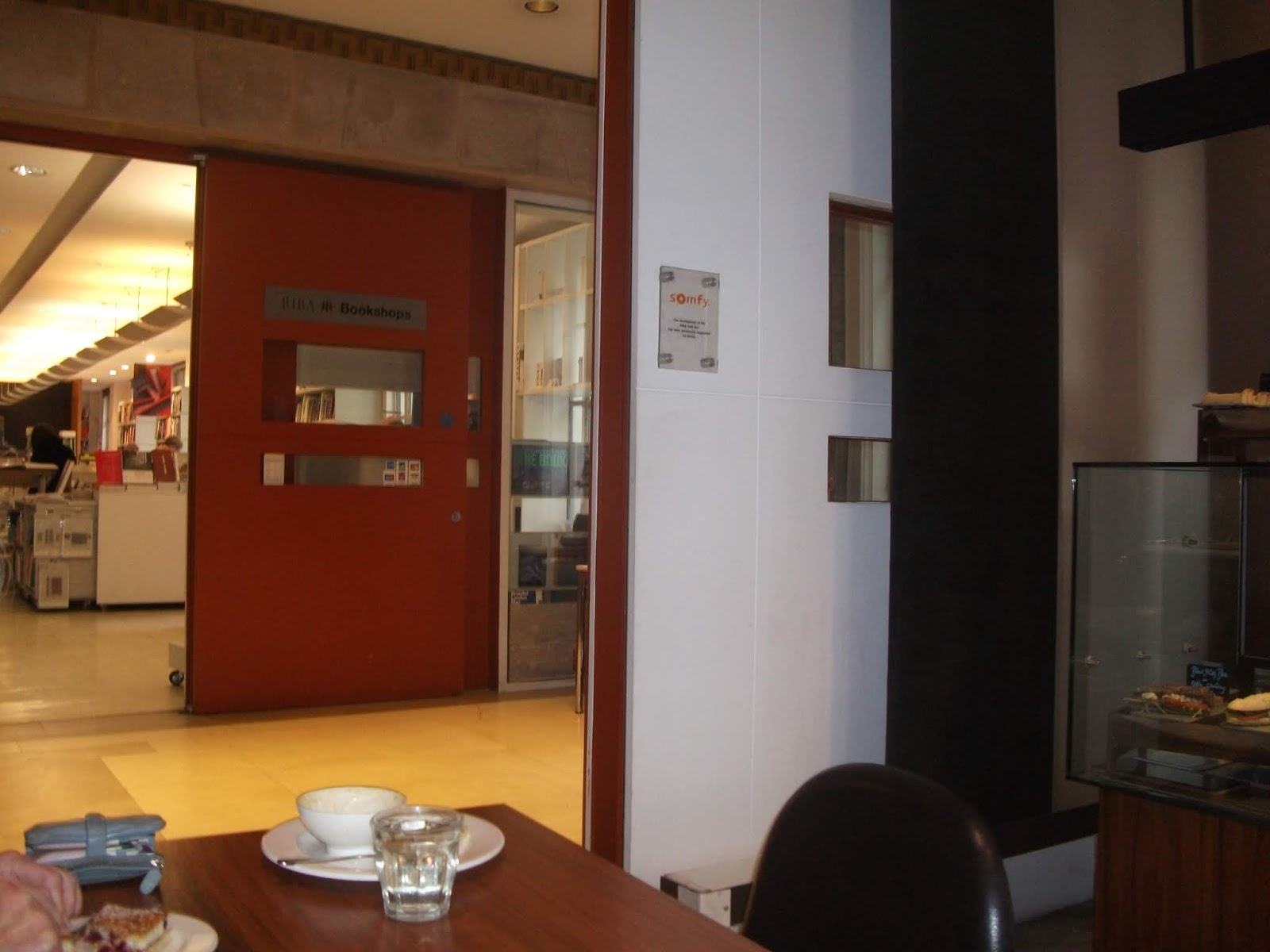
The first Cafe has been on my list to visit for a long while, since March 2017​; The RIBA Cafe. RIBA was a suitably impressive building, considering that RIBA stands for the Royal Institute of British Architects, with airy rooms and a luxurious staircase. There was an interesting exhibition going on, involving Hastings Pier and the Honest Shop, featuring honest consumables. The Cafe itself was small and inexpensive, but also felt cosy and friendly.


It was quite a walk, for me, from Portland Place via Regent's Street, Oxford Street and Soho Square to Foyles' Book Shop and the ghost of Ray's Jazz Cafe.


I remember drinking coffee in Ray's Jazz Cafe years ago, it was quite pleasant but now long gone. Today the music collection is on Floor Two and the cafe is on Floor Five. I have visited the new cafe before, it was big and noisy. I decided to press on down Charing Cross Road to St Martin's in the Field and the Cafe in the Crypt.


The Crypt Cafe was an enjoyable experience, even though it was a bit busy and noisy. The environment was suitably Gothic and crypt-like, with high arches and soft, yellow lighting. I enjoyed my coffee and my mindful musings and my look at St Martin's Church which I don't usually pay much attention to.


I finished my walk at Trafalgar Square wishing I was wearing different shoes, more suitable for London Streets and London Rain.